
Less than two weeks before Christmas last year, a 15-year-old girl, Endurance Sabon, had her hand cut off after her family rejected a forced marriage proposal by Islamist Fulani herdsmen in Kaduna State, Nigeria.
The attack occurred while she, her mother, and relatives were farming. According to the family, the attackers lived nearby and were known to them. They ambushed the group at approximately 6:30 p.m. after trailing them through the bush from the farm. The men shone a torchlight to identify Endurance, then dragged her into the forest, where they cut off her hand.
The International Federation of Women Lawyers (FIDA) Nigeria formally condemned the attack, calling it a violation of the 1999 Nigerian Constitution, the Child Rights Act, the Violence Against Persons (Prohibition) Act, the African Charter on the Rights and Welfare of the Child, and the UN Convention on the Rights of the Child.
Nigeria’s Middle Belt, including Plateau and Kaduna states, forms the fault line between the predominantly Muslim north and predominantly Christian south. Violence in this region is largely driven by Fulani militant groups and herdsmen pushing into Christian farming communities along this religious and ethnic boundary, creating a sustained frontier conflict over land and resources.
The motivations behind these attacks are a mix of ethnic, economic, and territorial disputes, with an Islamist dimension that varies by incident. In some cases, these groups are armed by or coordinated with jihadist networks. Written evidence submitted by Open Doors UK & Ireland to the UK Parliament documents links between jihadist networks and local militias, including the supply of weapons and the spread of radical ideology.
Plateau State has become one of the deadliest places in the world for Christians. According to the Open Doors World Watch List, 546 Christians were killed in Plateau State in the most recent reporting year, compared with 48 Muslims.
The violence has continued into 2026. On Palm Sunday 2026, gunmen stormed the Ungwan Rukuba community, in Jos, Plateau State around 8 p.m., killing at least 27–30 residents, with the Christian Association of Nigeria noting the attackers wore uniforms resembling those of Nigerian security forces. Between April 3 and 11, 2026, Fulani terrorists killed eight more Christians across Riyom and Barkin Ladi counties.
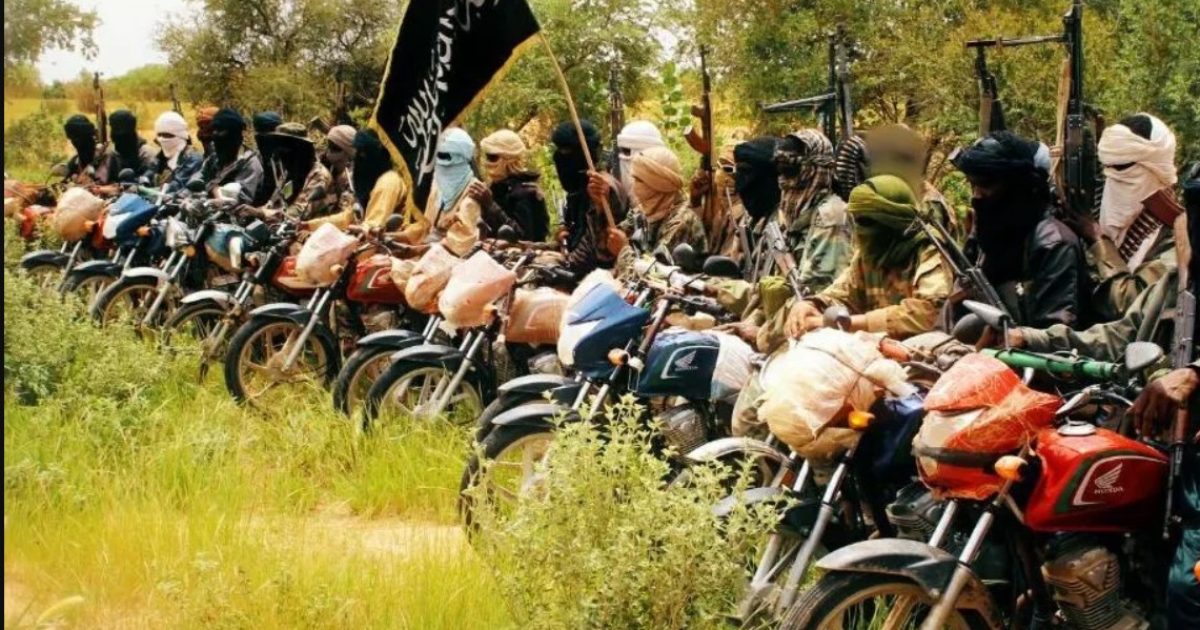
In a separate incident in far-off Borno State, fighters of Jama’atu Ahlis-Sunna Lidda’Awati Wal-Jihad (JAS) attacked the Ngoshe community in Gwoza Local Government Area on March 4, 2026.
Borno State is the historical heartland of Boko Haram, which was founded in Maiduguri in the early 2000s. JAS is the original Boko Haram faction and a rival to the Islamic State West Africa Province (ISWAP) splinter group.
They overran a military base, the 82 Division Task Force Battalion under the 26 Brigade. The attackers burned armored tanks and vehicles and seized ammunition. They then advanced on an IDP camp in the community.
In early April, JAS released a proof-of-life video produced at the request of the Borno South Youth Alliance, which acted as a mediator. The video showed 416 captives, mostly women and children, surrounded by armed fighters.
On April 19, Boko Haram issued a 72-hour ultimatum demanding ₦5 billion (about $3.1 million USD) for the captives’ release, warning they would be “distributed to different locations” if demands were not met.
Unlike the communal anti-Christian violence in Kaduna and Plateau states, the Ngoshe attack reflects a distinct pattern. JAS is a jihadist insurgency targeting the Nigerian state itself, its security forces, and civilian communities that cooperate with government authority. Its violence is ideologically driven by the goal of establishing an Islamic state. Borno State’s population is predominantly Muslim, and JAS victims are not exclusively Christian.
The scale of Fulani militia violence, however, dwarfs that of the transnational jihadist groups. Between October 2019 and September 2024, the Fulani Ethnic Militia was responsible for 47 percent of all civilian killings in Nigeria, more than five times the combined death toll of Boko Haram and ISWAP, which together accounted for just 11 percent. Unlike the jihadist groups, Fulani militia violence follows a distinct methodology. Armed groups invade small Christian farming settlements to kill, rape, abduct, and burn homes, a pattern that has proven effective at achieving long-term territorial control and demographic change.
These two streams of violence are converging. Boko Haram and ISWAP have expanded westward into parts of Adamawa, Gombe, and Yobe states, and there are documented cases of Fulani militant groups in the Middle Belt receiving arms, financing, and coordination from jihadist networks. The UK All-Party Parliamentary Group for International Freedom of Belief found that radicalized Fulani militants “demonstrate a clear intent to target Christians and potent symbols of Christian identity,” adopting tactics comparable to Boko Haram and ISWAP. Security analysts warn that militant Islamist groups in Nigeria demonstrate remarkable staying power and threaten to co-opt and Islamize other violent conflicts across the region.
Of the 4,849 Christians killed worldwide for their faith from October 2024 to September 2025, 72 percent were Nigerians. Despite this, Nigeria has struggled to prosecute perpetrators due to inadequate law enforcement and a dysfunctional judicial system. In October 2025, the Trump administration redesignated Nigeria as a Country of Particular Concern under the International Religious Freedom Act for tolerating systematic and egregious violations of religious freedom.
The post Boko Haram, ISWAP, and Fulani Militias: Nigeria’s Christians Attacked by Multiple Jihadist Groups appeared first on The Gateway Pundit.