

Nature is more resilient than we imagine.
The world was shaken to the core forty years ago, on April 26, 1986, when an explosion in reactor number 4 of the Chernobyl Nuclear Power Plant that destroyed the reactor core and ignited a graphite fire.
The worst nuclear disaster in history unfolded.
A massive plume of radioactive material was released into the atmosphere, contaminating large areas of Ukraine, Belarus, and Russia, with fallout spreading across much of Europe.

But today, four decades later, on contaminated land that is still too dangerous for human life, a variety of animals have returned to the exclusion zone.
Watch: blue dogs in Chernobyl – it’s actually not radiation, but a dye used in portable toilets.
Blue dogs spotted in Chernobyl
Volunteers in the Chernobyl Exclusion Zone have discovered packs of dogs with bright blue fur, Daily Mail reports. According to researchers, the animals appear healthy and active despite their unusual coloration.
Scientists believe that… pic.twitter.com/6cBPBW9vpi
— NEXTA (@nexta_tv) October 28, 2025
 Blue dogs spotted in Chernobyl
Volunteers in the Chernobyl Exclusion Zone have discovered packs of dogs with bright blue fur, Daily Mail reports.
According to researchers, the animals appear healthy and active despite their unusual coloration.…
— The Internet Remains Undefeated (@WebUndefeated) October 29, 2025
Associated Press reported:
“Across the Chernobyl exclusion zone, Przewalski’s horses — stocky, sand-colored and almost toy-like in appearance — graze in a radioactive landscape larger than Luxembourg.
[…] Four decades on, Chernobyl — which is transliterated as ‘Chornobyl’ in Ukraine — remains too dangerous for humans. But the wildlife has moved back in.”
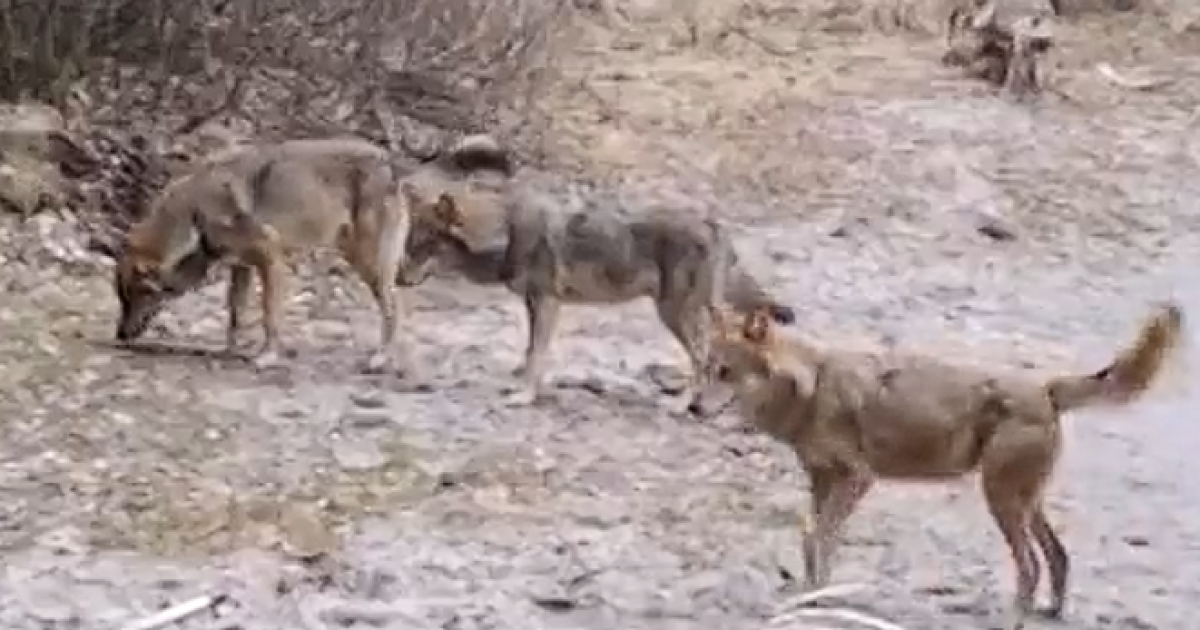
“Wolves now prowl the vast no-man’s-land spanning Ukraine and Belarus, and brown bears have returned after more than a century. Populations of lynx, moose, red deer and even free-roaming packs of dogs have rebounded.”
Watch: the variety of thriving animals in Chernobyl.
A quasi 40 anni dal disastro, Chernobyl è un ecosistema unico. Cavalli di Przewalski, lupi e orsi bruni ripopolano la zona di esclusione tra Ucraina e Bielorussia. Senza la presenza umana, la natura ha riconquistato le città fantasma. pic.twitter.com/c1ZfvbPFpY
— LaPresse (@LaPresse_news) April 20, 2026
Read more:
The post WATCH: Animals Are Thriving on Contaminated Land in Chernobyl’s Radioactive Exclusion Zone appeared first on The Gateway Pundit.