

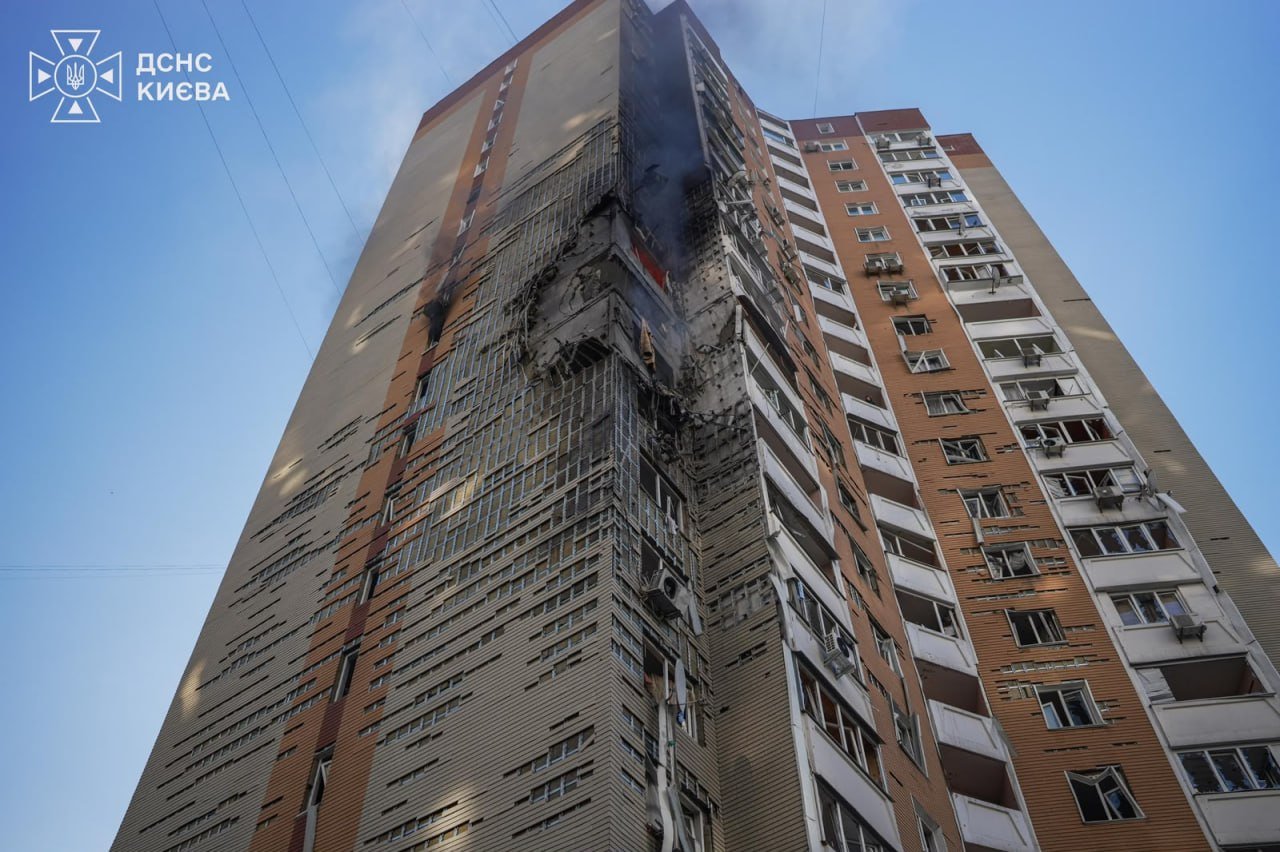
Russia’s drone and missile campaign against Ukraine has entered a new phase, aimed at the infrastructure that keeps Ukraine’s cities functioning and at the countries that keep its military supplied. In Kyiv, Russian drone strikes have closed or restricted three of six road bridges linking the capital’s two banks.
In Germany, Ukraine’s largest European provider of military aid, the government has blamed Moscow for an explosive-laden drone found at Leipzig airport and says it expects more hybrid attacks. With ceasefire talks unlikely to produce results before spring 2027, Putin appears to be using the winter to raise the cost of the war for Ukrainians and for Berlin.
The bridge strikes on October 1 and 2 targeted a pressure point in how Kyiv is laid out. The South Bridge, which carries both road traffic and metro trains, was hit three times in 24 hours, and the city has no vehicle tunnel under the Dnipro.
Before the 2022 invasion, more than a third of the city’s roughly 3 million residents lived on the eastern, or left, bank. Most government institutions and companies sit on the western bank. After the October 2 strikes, the Paton Bridge was closed in both directions, restrictions were placed on the Metro Bridge, and public transport was rerouted.
The Kyiv Defense Council called an emergency meeting on cross-river traffic. Traffic was restored by midday, but the attacks showed that Russia can disrupt movement between the city’s two banks within hours. Russia’s Defense Ministry said it struck an automobile-railway bridge because it was being used to move troops and military supplies.
Ukrainian officials link the bridge strikes to a decision made in Moscow. President Volodymyr Zelenskyy told the Financial Times that Putin ordered his military leadership in September to abandon previous restraints on drone and missile strikes, citing intercepted Kremlin communications. “He said there are no rules now,” Zelenskyy said. Since then, Russian strikes have hit schools, hospitals, and data centers in Kyiv.
Kremlin spokesman Dmitry Peskov told the newspaper that Russian forces do not strike civilian infrastructure. The escalation followed a pause in strikes against Kyiv that Putin ordered during a visit by U.S. negotiators in September.
The escalation comes as Ukraine’s long-range drone campaign puts pressure on Russia’s economy. Attacks on Russian refineries, ports, and storage sites have cost Russia 1% of GDP, according to Putin himself, and Russians have formed long lines at fuel stations. The Washington Post, citing members of the Russian elite and Western officials, reported that Putin decided to push Ukraine to the brink by winter, taking advantage of weakened Ukrainian air defenses to force Kyiv to accept his territorial demands.
Russia’s use of jet-powered drones increased in September. Russian forces launched 3,177 jet-powered drones, up from 2,850 in August. Zelenskyy said Ukraine is downing about 57% of jet drones, compared with 85% to 90% of conventional ones. He said Ukraine is trying to build specialized interceptors but faces engine shortages and a budget shortfall.
Ukrainian officials say Russia plans to isolate the country’s largest cities by winter, cut power supplies to nuclear facilities, and force concessions in early 2027. Kyiv also says one aim of the drone and missile strikes is to trigger a new wave of Ukrainian refugees into the European Union, straining countries where anti-immigrant sentiment is rising.
The second front runs through Germany. Berlin has provided around €40 billion in military aid since 2022, and Chancellor Friedrich Merz has raised military support for 2026 to €11.5 billion. In September, Defense Minister Boris Pistorius pledged PAC-2 interceptors from Bundeswehr stocks, and Ukraine will order several thousand IRIS-T missiles from Germany, financed through the EU-Ukraine defense loan. Speaking in Münster on October 1, Merz said, “If Germany falters, Europe and Ukraine will falter.” He warned that if Ukraine were defeated, the Russian war machine could turn against NATO countries.
German officials also accuse Russia of sabotage on German territory. On August 4, a drone carrying explosives was found near a Ukrainian Antonov cargo plane at Leipzig/Halle Airport, a freight hub used by the Bundeswehr and NATO logistics. On September 1, Interior Minister Alexander Dobrindt said the government had concluded that Russia is responsible, citing drone components, explosives, and ignition systems known from other Russian operations. He attributed the attack to “low-level agents.” Another drone with traces of explosives was later found near the airport. “We are not at war, but we are a daily target of hybrid warfare,” Dobrindt said.
Berlin ordered the Russian consulate in Bonn closed by September 18 and ended its agreement with the Russian House cultural center in Berlin. Foreign Ministry spokeswoman Maria Zakharova said Moscow would respond to Germany’s “anti-Russian actions.” Russia denied involvement, and Putin accused Germany of planting evidence. Pistorius said Russian intimidation and hybrid attacks would not work on Ukraine, Germany, or other partners.
The German government also alleges that the Kremlin’s campaign targets German domestic politics. Merz said Moscow uses hybrid attacks and social media bots to divide German society and weaken Germany’s support for Ukraine. He linked the effort to the Alternative for Germany (AfD) and “their Russian backers,” though he did not provide specific evidence of Russian support for the party. The AfD advocates ending military aid to Ukraine and resuming imports of Russian gas, both outcomes that would serve Moscow’s objectives.
Merz said Germany is preparing for “serious” new hybrid attacks and that there are currently no signs Moscow is ready to end the war. In Kyiv, Kyrylo Budanov, head of the Office of the President, said real conditions for a ceasefire are unlikely before spring 2027. That leaves the winter months for Putin’s two-front strategy: strikes to isolate Ukrainian cities and disrupt essential services, and sabotage and political pressure to make supporting Ukraine costly for Germany.
The post Putin’s Winter Strategy: Destroy Ukraine’s Infrastructure, Intimidate Berlin appeared first on The Gateway Pundit.