
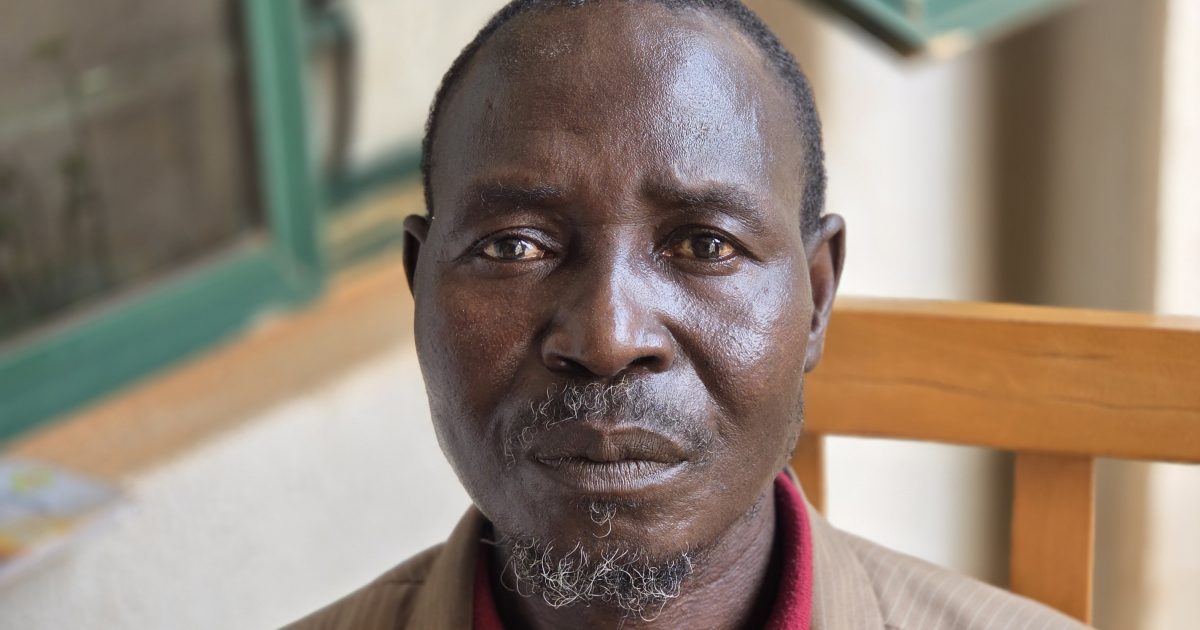

“They kidnapped me and threatened me to stop preaching,” said Amos Magani, a former civil servant who has been doing missionary work for 30 years. In 2017, he was kidnapped by Fulani Islamists while traveling to another village on a ministry trip.
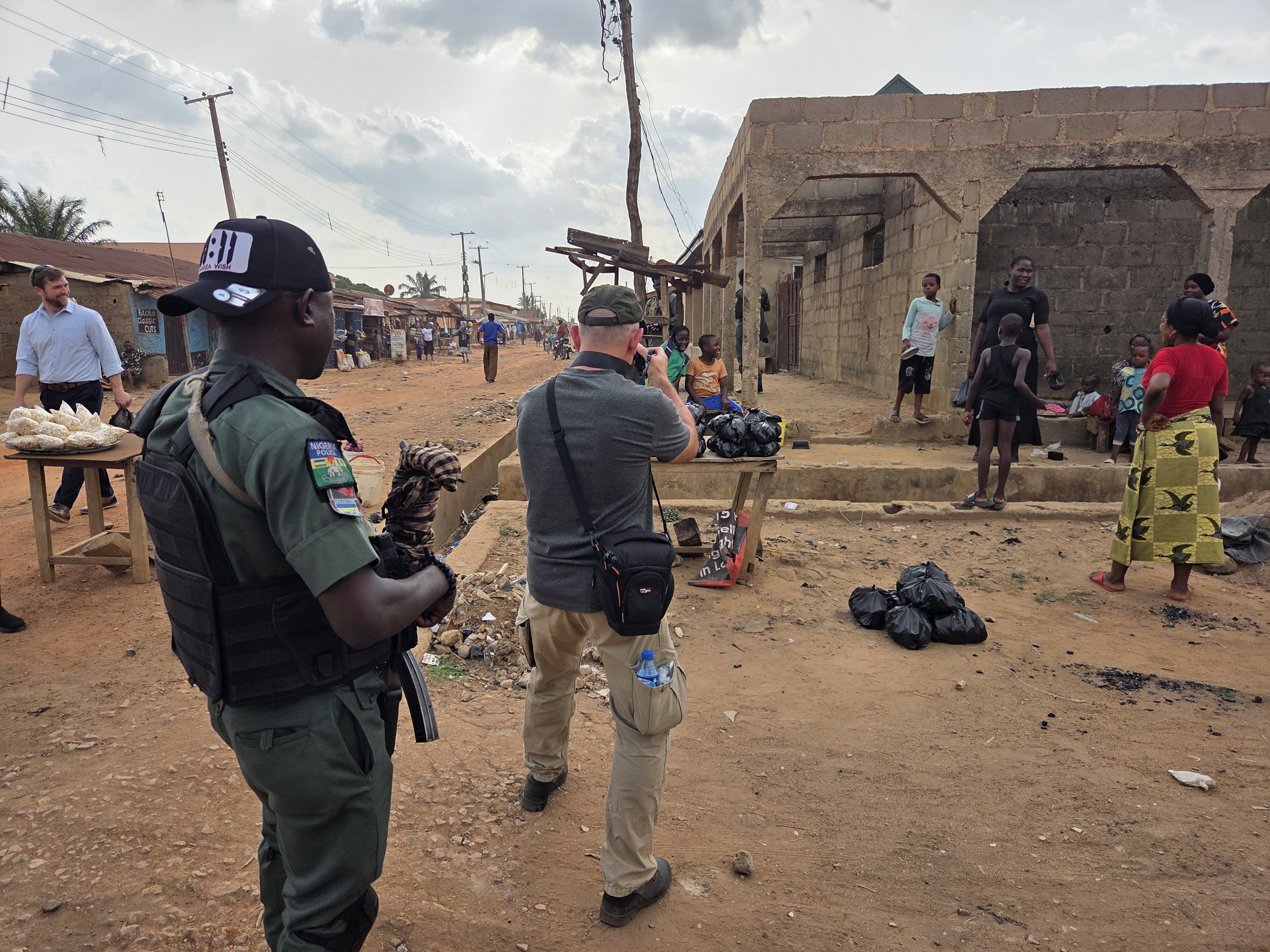
Magani was one of about 150 attendees at the Rod and Staff Conference in Kaduna State, Nigeria, an event organized by the Christian Awareness Initiative of Nigeria (CHAIN) in partnership with Palace Alliance, a U.S.-based aid organization. During the two-day conference, attendees were invited to share stories of kidnappings and attacks they had personally witnessed or experienced.
Sadly, Fulani attacks on Christians in Nigeria’s Middle Belt region are so common that nearly every conference participant had a story, each more harrowing than the next.

Magani went on to say that when he was taken, the kidnappers held him in thick bush, deep in the jungle. They threatened him with their guns and demanded a ransom.
At one point, he attempted to preach to his captors in the hopes of softening their hearts. However, the kidnappers responded, “If you are preaching to me, get me a goat,” a mocking response telling him to stop wasting their time. They released him after collecting 200,000 naira, which at the time was worth about $600 USD, far more than a year’s wages for many Nigerians.
Although the ransom had been paid, shortly after his release the kidnappers came to his house again, forcing him to flee. He has not returned to his town since then. He also no longer has a cell phone because the kidnappers took it, and in the intervening nine years he has not been able to save enough money to buy a replacement.
According to Amos, the kidnappers’ goal was to make him stop preaching. So, of course, he continues to travel and preach today.
Another of the conference attendees, an Igwe, a king of the Igbo tribe from Sanga Local Government Area, shared his story.
“Our place is in danger every night,” began the Igwe. “We are running up and down,” meaning they are constantly scrambling about in a state of panic. “They kidnap people every day. If you don’t have money, they will shoot you.”
“They have killed a medical doctor and a trader who sold herbicides and agricultural inputs.”
He went on to recount that both he and his daughter had been kidnapped.
“My wife and children have run away, and they have left me alone here,” said the Igwe, meaning that his wife and the rest of his children had fled the area entirely for safety. But as king, he is obliged to remain and look after his people.
“When they kidnapped me, they demanded 5 million naira.”
Apart from money, the kidnappers had some other unusual demands. They wanted a pack of Tramadol, a hard drug, and a pack of energy drinks.
Even after the money and other items were handed over, the kidnappers returned to plague the family again.
“Five days ago, they came to kidnap my brother, but he slipped under the table and escaped.”
The Igwe went on to explain that other families in the village have also been targeted.
“There was another attack on Monday, and it happens on a daily basis.”
Not only does the Igwe know where the kidnappers are hiding, but he claims the authorities know as well.
“This area is surrounded by thick forest, and the kidnappers have set up camp there. The army is aware of their presence in the forest.”
The Igwe said he has tried to protect his people.
“We have conducted several air patrols in the area, but up to now, nothing has been done about the presence of the kidnappers in the forests close to the area.”
A further frustration he expressed was the frequency with which both he and the army encounter the culprits.
“Whenever they kidnap someone, they pass through army checkpoints on the road, and the army seems not to be stopping them.”
Everyone knows what is happening, he said, but they are afraid to testify.
“Nobody dares to talk. If you talk, you will be picked up and killed.”
The Igwe concluded by explaining, “I am confiding in you because I am hoping that if you have any help, you should please help, particularly in this town of Fadan Karshi, because it is a Christian-dominated town, and we are the ones who always suffer the persecution.”
A pastor stood up and shared the truth that was weighing on his heart. As he spoke, the audience nodded their heads in knowing agreement.
“Instead of coming to defend us, the authorities are coming to disarm us, searching our houses to see if we have anything to defend ourselves.”
In Nigeria, private citizens generally cannot own modern firearms. Hunters often have muzzle-loaders or homemade single-shot rifles, and in some villages the hunters form vigilante squads to defend against Fulani attacks.
However, according to many of the victims I interviewed in Nigeria, the Fulani can arrive in groups of more than 100, often on motorcycles and carrying AK-47s. As a result, the small number of vigilantes defending the villages with muzzle-loaders are not attempting to defeat the invaders, but rather to buy time so the rest of the villagers can escape.
However, as the pastor said, in instances where the villagers have fought back, the police have at times confiscated even their primitive weapons and have on occasion jailed the defenders.
After years of daily murders and kidnappings, and the occasional arrest of defenders, my primary takeaway from the conference was that Nigerian Christians have had enough. They all expressed fatigue, and many talked about the stress and trauma caused by the constant threat of attack. Those who have been kidnapped often need months to recover, and even then they are never the same.
All of the conference attendees I spoke with said they loved President Trump and were grateful for U.S. intervention, but they want more. Most said they simply wanted to be able to return to their original villages, work their fields, put their children back in school, and resume their lives.
For now, however, many are displaced and struggling to survive without land to farm. For many families, their children’s education stops once they become displaced because they do not have enough money to eat, much less pay school fees. In some cases, it may also be too dangerous for children to walk to and from school for fear of Fulani attacks.
The post Reporting from Nigeria: Christians Describe Kidnappings and Attacks by Fulani Islamists appeared first on The Gateway Pundit.