
This story originally was published by Real Clear Wire
Most of America’s allies are still operating under the old rules. A few are already adapting. The rest are about to find out what the new framework actually requires.
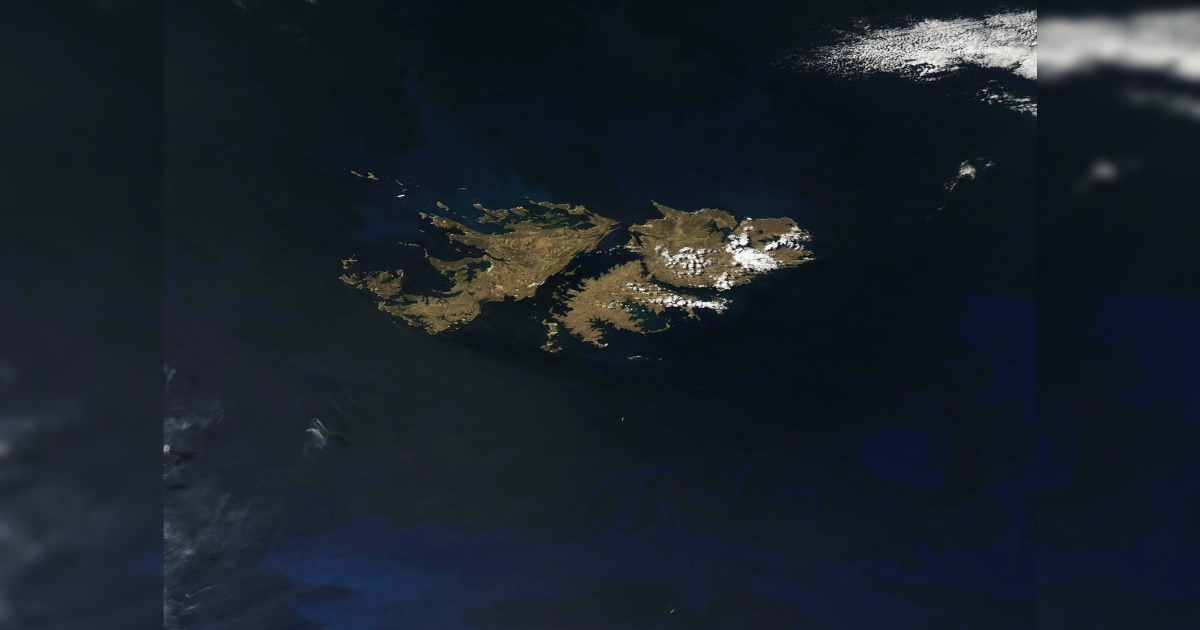
On April 24, an internal Department of War email leaked into the news. Its contents were stark. The Pentagon was weighing the suspension of Spain from NATO and a review of long-standing American support for British sovereignty over the Falkland Islands. Both measures were responses to the same problem. America’s allies had failed the test.
Pentagon Press Secretary Kingsley Wilson confirmed the substance on the record. “Despite everything that the United States has done for our NATO allies, they were not there for us,” she said. “The War Department will ensure that the President has credible options to ensure that our allies are no longer a paper tiger and instead do their part.” Secretary of State Marco Rubio went further on Fox News the same day. “If we’ve reached a point where the NATO alliance means we can’t use those bases to defend America’s interests, then NATO becomes a one-way street.”
The email was not the story. The email was a symptom. The story is a strategic reorientation now 18 months in the making, codified in three documents — the November 2025 National Security Strategy (NSS), the January 2026 National Defense Strategy (NDS), and the policy architecture known as Project 2025. Most of America’s allies have not yet read them carefully. A handful have already begun acting on them. The gap between those two groups is the central drama of American foreign policy.
The framework
The new strategy rests on three pillars. Secretary of War Pete Hegseth named them in a single paragraph in his introductory memorandum to the 2026 NDS: “We will defend the Homeland and ensure that our interests in the Western Hemisphere are protected. We will deter China in the Indo-Pacific through strength, not confrontation. We will increase burden-sharing with allies and partners around the world.”
The doctrinal break with prior strategy is announced in the same memo’s first paragraph. “For too long, the U.S. Government neglected — even rejected — putting Americans and their concrete interests first. Previous administrations squandered our military advantages and the lives, goodwill, and resources of our people in grandiose nation-building projects and self-congratulatory pledges to uphold cloud-castle abstractions like the rules-based international order.”
Critics have called this isolationism. The document anticipates the charge and rejects it. “This does not mean isolationism. To the contrary, it means a focused and genuinely strategic approach to the threats our nation faces and how to best manage them. This approach is based on a flexible, practical realism that looks at the world in a clear-eyed way, which is essential for serving Americans’ interests.”
The NSS makes the burden-sharing demand explicit. The days of America propping up the entire world order, the document declares, “are over.” Wealthy and sophisticated allies “must assume primary responsibility for their regions and contribute far more to our collective defense.” The Hague Commitment of June 2025 — under which NATO members pledged to spend five percent of GDP on defense by 2035 — is named as the new global standard. The document spells out the reward structure for compliance: “more favorable treatment on commercial matters, technology sharing, and defense procurement.”
The NDS sharpens this into operational guidance. The Department will “prioritize cooperation and engagements with model allies — those who are spending as they need to and visibly doing more against threats in their regions, with critical but limited U.S. support — including through arms sales, defense industrial collaboration, intelligence-sharing, and other activities that leave our nations better off.”
Three pillars. Two camps. A grading scheme written into the documents themselves. What follows is a midterm report card on some of the most prominent students.
The allies who get it
Japan. No ally on earth has done more in eighteen months to integrate its industrial base with the new American framework. The October 2025 Tokyo agreement signed by Trump and Prime Minister Sanae Takaichi advanced a $550 billion Japanese investment commitment to the United States. The two governments signed a Memorandum of Cooperation expanding shipbuilding capacity in both countries. The United States accelerated deliveries of Advanced Medium-Range Air-to-Air Missiles for Japan’s F-35s — what the White House Fact Sheet called “enhancing deterrence and burden sharing in the First Island Chain.” A critical minerals agreement followed.
The NSS names Japan and South Korea by name as the allies most needed to step up in the Indo-Pacific. Japan answered. The FY2026 Japanese defense budget runs to a record $58 billion. Tokyo announced participation in the Golden Dome missile defense initiative during the March 2026 Takaichi-Trump White House summit. Trump described the Japan partnership at that summit as “an unstoppable force for freedom, security, and progress.” It is not flattery. It is a description of the alliance the documents asked for.
Japan understood the assignment.
Poland. Poland passed the test before the test was administered. The Polish defense budget reached 4.7 percent of GDP in 2025 — already the highest in NATO, set ahead of the Hague Summit’s 5 percent target. Defense Minister Władysław Kosiniak-Kamysz, speaking at the Warsaw EU defense ministers meeting in April 2025, framed it plainly: “Five percent is the goal we want to achieve next year, to get closer and closer to five percent.”
What makes Poland the most useful case for American readers is that the spending trajectory is bipartisan. The conservative Law and Justice government began it. The center-right Civic Platform government under Donald Tusk continued it. Poland did not need to be threatened, lectured, or bullied. Poland could see what was coming. Burden-sharing in Warsaw is not a partisan question. It is a survival question.
United Arab Emirates. When Iran’s missiles came, the United Arab Emirates absorbed more than any country except Israel itself. Roughly 83 percent of Iran’s retaliatory strikes during the 2026 war fell on Gulf Cooperation Council states. The UAE took the most. Abu Dhabi answered by deepening, not distancing, its alliance with Washington. It closed its embassy in Tehran. It deepened defense cooperation with Israel under fire.
On April 28, the UAE announced it would leave OPEC and OPEC+ effective May 1, 2026. Energy Minister Suhail Al Mazrouei made the timing explicit on CNN: “Timing is right because it will not significantly impact the market and the price because the Strait of Hormuz is closed and restricted.” The UAE was OPEC’s second-largest producer, accounting for roughly 17 percent of the cartel’s 2024 sales. The exit, in eight weeks of war, places Abu Dhabi as the Gulf state most aligned with the framework Hegseth’s memorandum names — closing chokepoints to American adversaries while expanding energy supply to American friends.
The 2026 NDS, written before the war began, anticipated this. “In the Gulf, U.S. partners are increasingly willing and able to do more to defend themselves against Iran and its proxies, including by acquiring and fielding a variety of U.S. military systems. This creates even more opportunities for us to enable individual partners to do more for their defense.” The document predicted the partner. The UAE has been that partner.
Argentina. Argentina is the test case for the Trump Corollary to the Monroe Doctrine, and Argentina is passing. President Javier Milei’s October 2025 currency crisis was met not with World Bank lectures or IMF austerity but with a $20 billion U.S. Treasury swap line, announced over Treasury Secretary Scott Bessent’s signature. “Argentina faces a moment of acute illiquidity,” Bessent wrote. “Only the United States can act swiftly. And act we will.” He framed the strategic stakes plainly: the success of Milei’s reforms is “of systemic importance to the U.S. by helping to anchor a prosperous Western Hemisphere.”
Argentina repaid the swap in full by January 9, 2026. The U.S. Treasury made tens of millions in profit. The hemispheric framework rewarded the aligned ally; the aligned ally vindicated the framework.
The NSS specifies that the United States “will reward and encourage the region’s governments, political parties, and movements broadly aligned with our principles and strategy.” Milei is not a beneficiary of the doctrine. Milei is the doctrine, alive in policy. “Together, as the closest of allies,” he wrote on the day of the swap, “we will make a hemisphere of economic freedom and prosperity.”
The allies who refused
Spain. Spain is the only NATO member that has refused both tests at once. At the Hague Summit, Spain became the only ally exempted from the 5 percent commitment, capping itself at 2.1 percent. When the Iran war began on February 28, 2026, Spain refused American use of the joint Rota and Morón bases. On March 30, Spain closed its airspace to American aircraft involved in strikes on Iran.
Prime Minister Pedro Sánchez summarized his position in a nationally televised address on March 4. “The position of the Spanish government can be summed up in four words: no to war.” He drew the parallel to José María Aznar’s support for the 2003 Iraq invasion and called the present war “illegal.” He addressed parliament on March 25 with one of the more memorable lines of the conflict: “The Government of Spain will not applaud those who set the world on fire just because they show up with a bucket.”
Trump’s response, in a meeting with German Chancellor Friedrich Merz: “Spain has been terrible. We’re going to cut off all trade with Spain. We don’t want anything to do with Spain.” On the Pentagon email itself, Sánchez deflected: “We do not work with emails. We work with official documents and positions taken, in this case, by the government of the United States.”
The official documents are the ones Sánchez should have read. The NSS names burden-sharing as the new standard. Sánchez exempted himself. The NDS names empowering regional partners against Iran as the Middle East mission. Sánchez closed the airspace. Sánchez has answered every question America has asked. The answer has been No.
Canada. On January 16, 2026, Mark Carney became the first Canadian prime minister to visit Beijing since 2017. He left with a trade deal. Canada’s 100 percent tariff on Chinese electric vehicles was cut to 6.1 percent, with an annual cap of 49,000 Chinese EVs entering the Canadian market in exchange for Chinese tariff concessions on Canadian agricultural exports. Bloomberg’s framing was unambiguous: “a break from alignment with President Donald Trump’s trade agenda.”
The NSS could not be clearer about the choice Carney made. “President Trump single-handedly reversed more than three decades of mistaken American assumptions about China,” the document declares — “namely, that by opening our markets to China, encouraging American business to invest in China, and outsourcing our manufacturing to China, we would facilitate China’s entry into the so-called ‘rules-based international order.’ This did not happen. American elites — over four successive administrations of both political parties — were either willing enablers of China’s strategy or in denial.” The NSS frames the present moment as a choice between “an American-led world of sovereign countries and free economies” or “a parallel one in which they are influenced by countries on the other side of the world.”
Carney chose Beijing. Six days later, at Davos, he warned of “great powers” using “economic integration as weapons” and offered the line that defined his foreign policy: “Middle powers must act together because if you are not at the table, you are on the menu.” Trump revoked Carney’s invitation to the Board of Peace within days. “Canada lives because of the United States,” Trump posted. “Remember that, Mark, the next time you make your statements.”
By March, on Iran, Carney called the war “another example of the failure of the international order” and noted that the United States had “acted without engaging the United Nations or consulting with allies, including Canada.” Defense Minister David McGuinty confirmed Canada “will not be participating.” Canada hit NATO’s old 2 percent target only in 2025 — the first time since the end of the Cold War, as Carney himself acknowledged.
The 2026 NDS names Canada specifically as having “strong roles in hemispheric defense” and “a vital role to play in helping to defend North America.” Carney went to Beijing. The framework asked Canada to defend the hemisphere. Canada cut a deal with the country the framework names as the principal threat to it.
What the report card shows
The grades posted here are not the final grades. The Iran war could end this week in a deal, or next week in a renewed strike, or next month in the slow collapse of a ceasefire that nobody trusts. Whichever way it goes, the test does not change.
The framework asks who can defend their region. Who will share the burden. Who will help deter the threats America has named.
Japan, Poland, the United Arab Emirates, and Argentina have answered. Spain and Canada have refused.
The NDS is explicit about what comes next. Model allies will receive arms sales, defense industrial collaboration, intelligence-sharing, and “other activities that leave our nations better off.” The Pentagon email of April 24 is what comes next for the others.
History does not grade nations on the cleverness of their hedging. It grades them on what they did when their friend asked for a base, a port, a missile, a ship.
The answers being given now are being remembered now.
Christopher J. Little is a writer and essayist based in St. Louis. “Power Play” is his first work of geopolitical analysis.
References:
Section I — The Hook
• Pentagon email and Wilson statement: Foreign Policy, April 24, 2026
• Rubio on Fox News: Euronews, April 24, 2026
Section II — The Framework
• Hegseth memo “cloud-castle abstractions,” “this does not mean isolationism”, three-pillars passage: 2026 NDS, Hegseth introductory memorandum, pp. 1–2
• Atlas / burden-sharing language and reward structure: 2025 NSS, p. 12
• “Model allies” reward language: 2026 NDS, p. 19
Section III — Passing Cases
• Japan $550B and shipbuilding MOC: White House Fact Sheet, October 28, 2025
• Trump on Japan (“unstoppable force”): Stimson Center
• Japan defense budget and Golden Dome: Brookings, March 17, 2026
• NSS naming Japan and Korea: 2025 NSS, p. 24
• Poland 4.7% GDP defense spending: CRS Report R45784; Wilson Center, March 6, 2025
• Kosiniak-Kamysz “five percent next year”: IRIA News, April 3, 2025
• UAE 83% of Iranian strikes: Atlantic Council MENASource, April 2026
• UAE OPEC exit: Bloomberg, April 28, 2026; Washington Post, April 28; CFR, April 29
• Mazrouei CNN quote on Hormuz timing: CNN, April 28, 2026
• NDS Gulf partners passage: 2026 NDS, p. 12
• Bessent on Argentina swap: CNBC, October 9, 2025
• Argentina swap repayment: Fortune, January 9, 2026
• NSS hemispheric reward language: 2025 NSS, p. 16
• Milei response: Fortune, October 9, 2025
Section IV — Failing Cases
• Spain 5% exemption: CRS Report R45784
• Spain refused bases / closed airspace: Time, April 24, 2026; NPR, March 12, 2026
• Sánchez “no to war” televised address (March 4): Euronews, March 4, 2026; Al Jazeera, March 4, 2026
• Sánchez parliamentary “bucket” address (March 25): CNBC, April 8, 2026
• Trump on Spain “terrible”: Al Jazeera, March 4, 2026
• Sánchez on Pentagon email: Time, April 24, 2026
• Carney Beijing visit and EV deal: Bloomberg, January 16, 2026; CBC, January 25, 2026
• NSS on China policy reversal: 2025 NSS, p. 19
• NSS on choice of worlds: 2025 NSS, p. 18
• Carney at Davos: CBC, January 25, 2026; NPR, January 24, 2026
• Trump on Carney Davos response: CNBC, January 24, 2026
• Carney on Iran war (Canberra): CBC, March 6, 2026; Time, March 19, 2026
• McGuinty “will not be participating”: Global News, March 10, 2026
• Canada NATO 2% first time since Cold War: Fox News, April 2026
• NDS on Canada hemispheric role: 2026 NDS, p. 19
Section V — Conclusion
• “Other activities that leave our nations better off”: 2026 NDS, p. 19
The post The Allies Who Get It appeared first on The Gateway Pundit.