
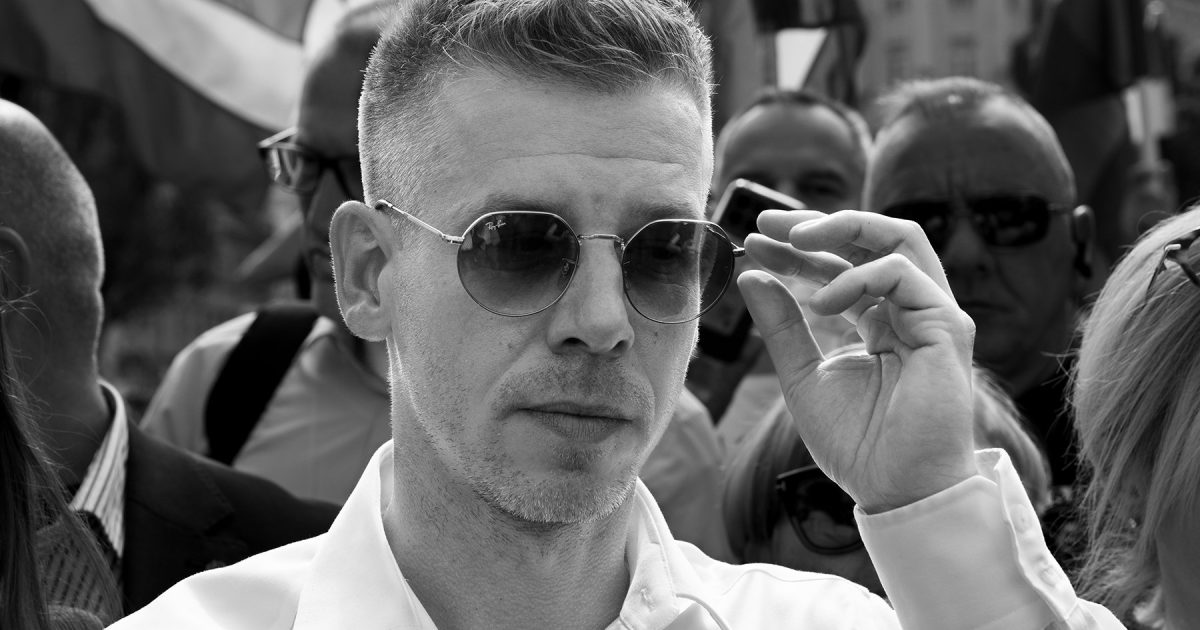

When Viktor Orbán was voted out in Hungary, on April 12, liberals celebrated. His replacement, Péter Magyar, however, immediately pushed back against accepting migrants and appears to be the worst outcome for the left: a relative conservative who also holds broader internal support than Orbán ever had.
Magyar’s Tisza Party secured 138 seats in the 199-seat parliament on 53.6% of the vote, while Orbán’s Fidesz took just 55 seats with 37.8%. Magyar had been a high-ranking Fidesz insider and former husband of the Justice Minister, which allowed him to appeal to conservative rural voters while promising structural reforms to liberals, restoring the rule of law, combating corruption, and joining the European Public Prosecutor’s Office.
On the issues that defined Orbánism, Magyar is not breaking with his predecessor. He stated flatly that Hungary takes a “very strict stance on illegal migration,” that it will not accept “any pact or allocation mechanism,” and that the southern border fence will be kept and reinforced. From June 1, 2026, all work permits for non-European migrants will be terminated, with the aim of reducing new arrivals to zero. On sovereignty, Magyar stressed that Hungary’s history “is written by the Hungarian people, not in Moscow, not in Brussels, and not in Washington.”
Analysts have noted that Magyar’s positions on border control and demographics “remain in line with the anti-immigration and pro-family policy developed by Orbán, sometimes even appearing more radical than his predecessor.” Where he genuinely differs is on corruption, rule of law, and media freedom, and to a lesser degree on Russia. He has pledged to lift Hungary’s veto on the €90 billion EU loan to Ukraine, which Orbán had blocked, and has described Russia as a security risk.
But his positions on Ukraine stop well short of the EU mainstream. He opposes arms deliveries to Ukraine, opposes deploying Hungarian troops or transferring weapons from Hungarian territory, and insists Ukraine can only join the EU following a referendum in Hungary, according to the Carnegie Endowment for International Peace. He has also said the rights of the Hungarian minority in Transcarpathia are being eroded.
On Russian energy, structural constraints are severe regardless of Magyar’s intentions. Hungary expanded its reliance on Russian crude from 61% in 2021 to 93% by 2025, according to the Center for the Study of Democracy. Magyar has promised to end Russian oil imports by 2035, but the country remains locked into long-term Gazprom contracts and the TurkStream pipeline. The Carnegie Endowment notes that the circle of Hungarian beneficiaries from energy dependence on Russia extends well beyond Orbán, meaning Magyar will face domestic resistance to any rapid shift.
Magyar now holds a 138-seat supermajority, the central question is whether he will use it to rebuild democratic checks and balances or manage the existing centralized system more efficiently. The Hungarian electorate, even while voting out Orbán, did not vote for open borders.
Just a week later, on April 19, Bulgaria held its eighth snap election in five years. Former President Rumen Radev’s Progressive Bulgaria party won 44.7% of the vote, securing roughly 130 of 240 parliamentary seats, and Radev will become prime minister. He ran on an anti-corruption, anti-oligarchy platform and, despite the party name, governs from a sovereigntist position rather than a conventional conservative one.
His positions on record include opposition to EU sanctions on Russia, resistance to cutting Russian gas and oil imports, and opposition to military and financial support for Ukraine. Bulgaria joined the eurozone in January 2026 but remains dependent on Russian energy, and Radev has signaled he will resist EU pressure to accelerate the transition away from it.
He opposes the EU Green Deal’s emissions timelines, arguing they damage the Bulgarian economy, and has pushed back against EU budget conditionality, the mechanism Brussels uses to attach policy requirements to funding. On social policy, he holds traditional positions on family and gender issues, resisting the progressive agenda advanced by Western EU members. The European Council on Foreign Relations assesses his posture as similar to Slovakia’s Robert Fico, willing to criticize Brussels and resist specific directives while remaining inside EU and NATO frameworks.
Immigration did not feature in the campaign. Bulgaria’s geography makes it a transit country rather than a destination, with migrants moving on to wealthier Western European states rather than settling. As the EU’s poorest member state, Bulgaria does not attract asylum seekers looking to remain, and Radev has no notable public position on the issue.
The common thread in both countries is voter exhaustion with established political elites and fragile coalitions. Both Magyar and Radev won on anti-corruption platforms, both resist Brussels dictating domestic policy, both oppose the EU Green Deal’s imposed timelines, and neither supports sending weapons to Ukraine.
Across the Channel, Nigel Farage’s Reform UK has taken the lead in Westminster voting intentions at 27% as of April 21, 2026, polling 10 points ahead of both the Conservatives and Labour, running on an anti-immigration, pro-sovereignty platform pulling voters from both traditional parties.
At the EU level, even with Orbán’s personal defeat, the European Conservatives and Reformists and the Patriots for Europe groups are projected to hold significant positions. In Poland, Greece, and Lithuania, center-right EPP member parties have consolidated as the strongest national forces, and in Denmark the Danish People’s Party saw significant inroads in recent elections.
The post Europe Continues Slow Right Turn With Elections in Hungary and Bulgaria appeared first on The Gateway Pundit.