

Iraqi Prime Minister Ali al-Zaidi ordered federal authorities on November 24 to take over the Kurdistan Region’s border crossings and oilfields under Kurdish security control, citing oil smuggling. Within 24 hours, Iraq’s Federal Supreme Court ruled that Baghdad may deploy federal troops along the region’s international borders. Earlier that month, Baghdad accused the Iran-backed militia Kata’ib Hezbollah of running a smuggling operation out of Jurf al-Sakhar. That standoff produced an agreement for a phased withdrawal after talks with Esmail Qaani, commander of Iran’s Quds Force.
The orders bar the Kurdistan Regional Government (KRG) from approving exports of crude or petroleum products except through the federal Oil Ministry. The Border Ports Authority is to take over all official crossings in the region, which borders Turkey, Iran, and Syria. Border forces are to close unofficial crossings.
The Oil Ministry is to manage the fields that Kurdish forces guard in the disputed territories of Diyala, Kirkuk, Salahaddin and Nineveh. The Energy Police are to take control of all oilfields, and the Defense Ministry is to close unpaved roads linking the Kurdistan Region to those four provinces.
The court’s November 25 ruling held that securing Iraq’s borders is an exclusive federal power under Articles 109 and 110 of the constitution and that Kurdish authorities have no jurisdiction outside the areas they administered in March 2003.
Two judges dissented. The ruling allows the Oil Ministry to oversee and audit oil and gas fields, with production and exports managed jointly with regional governments. On November 26, federal authorities closed two KRG-run crossings, one with Syria and one with Iran.
The orders followed a special committee’s investigation into smuggling at the state-run North Oil Company. Al-Zaidi dismissed the head of the Border Ports Authority, the commander of the Kirkuk Operations Command and the Kirkuk police chief for failing to act against smuggling. He also suspended the North Oil Company’s director general and deputies pending an integrity investigation. The committee examined payments to pipeline guards who reportedly did not exist, petroleum exports through the region’s border crossings and crude shipments to the Bazian and KAR refineries in the Kurdistan Region. Excerpts from a government intelligence report published by the Iraqi News Agency trace smuggling routes from Kirkuk and Sulaymaniyah through Iran to Afghanistan and describe how Iranian petroleum products were passed off as Iraqi.
On November 27, government spokesman Haider al-Aboudi told the state news agency that oil exports that bypass the State Oil Marketing Organization (SOMO) count as smuggling because the proceeds do not reach the treasury. He said the Federal Board of Supreme Audit found that Kurdish oil exports outside SOMO cost Iraq more than $100 billion from 2008 to 2025.
Baghdad has not explained how the board calculated the figure. The government’s figures make little distinction between smuggling and the region’s independent oil sales, which became the KRG’s main source of revenue after Baghdad cut its budget share in 2014.
Iraq’s state-owned Al-Sabah newspaper and the Iraqi Media Network posted footage they said showed a smuggling site near the Kurdish-controlled Parviz Khan crossing with Iran. Both deleted their posts after it emerged that the footage was filmed in Salahaddin province. The Defense Ministry said it found no evidence of smuggling after inspecting pipelines there.
Kurdistan Region Prime Minister Masrour Barzani called Baghdad’s orders “in no way acceptable.” Kurdistan Democratic Party (KDP) leader Masoud Barzani called the decision “unsound and reckless” and said he would cooperate against smuggling through legal and constitutional means.
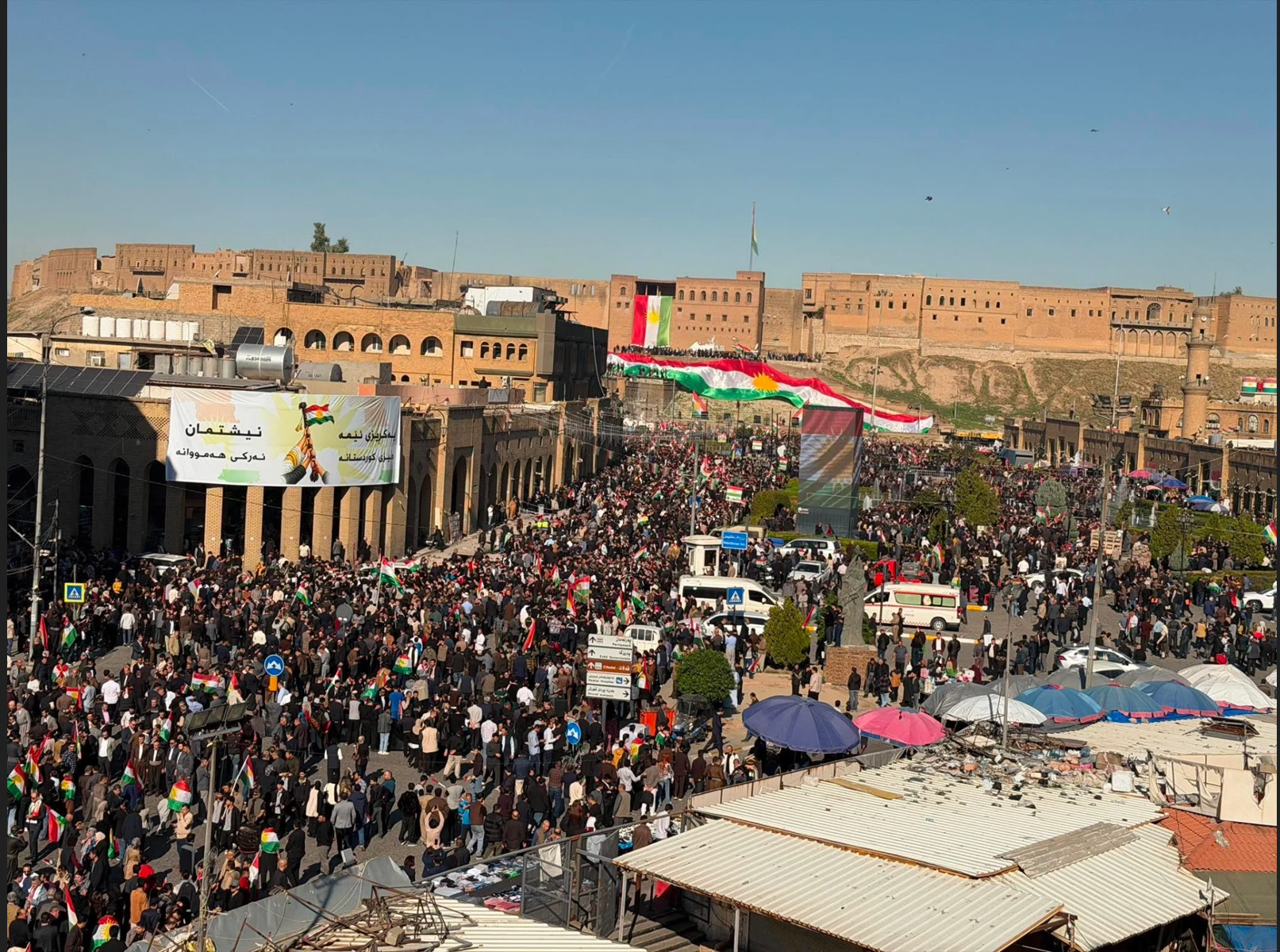
The KDP and the Patriotic Union of Kurdistan (PUK), rivals that have been unable to form a cabinet since the October 2024 elections, issued a joint statement warning that any infringement on the region’s federal status is a red line. The KRG rejected the “military language and threats” in a statement by Iraq’s military spokesman and called for an end to oil smuggling across the country. Thousands protested in Erbil and Duhok on November 26.
Washington’s pressure on Iraq over border crossings has focused on Iran. Iraqi Foreign Minister Fuad Hussein said on November 8 that the U.S. Treasury had asked Baghdad to close all but two crossings with Iran, including one that would remain open in the Kurdistan Region.
On November 27, President Donald Trump wrote on Truth Social that the United States supports al-Zaidi’s efforts “to assert state authority throughout Iraq,” to “stop the smuggling of Iraqi oil, end corruption, and bring all weapons under the exclusive control of the state.” The post did not mention the Kurds or Kata’ib Hezbollah.
Kata’ib Hezbollah, a U.S.-designated terrorist organization, has held Jurf al-Sakhar since 2014. Government sources estimate the value of oil smuggled from the area at about $2 billion a year.
Al-Zaidi dismissed nine senior security officials on November 14 over the smuggling. Two days later, he ordered the militia out of the town. Senior commander Abu Talib al-Saeedi rejected the order, saying, “That will not happen, not even over our dead bodies.” Qaani then flew to Baghdad.
The talks produced an agreement for the militia to withdraw gradually as Iraqi forces deployed. Kata’ib Hezbollah denied the smuggling charges and called them part of a campaign to strip it of its weapons.
Reports differ on how far the withdrawal has progressed. The New Arab reported that Kata’ib Hezbollah withdrew from about 70 percent of the territory it held. The Iraqi newspaper Al-Mada reported on November 25 that government forces had not entered the “core areas controlled by Kataib Hezbollah.”
It said the militia had received reinforcements and that Iranian and Houthi advisers remained in the area. Al-Mada also reported that more than 2,000 Kata’ib Hezbollah members had been integrated into the Popular Mobilization Forces’ 72nd and 79th brigades, where they now draw state salaries.
Analyst Tallha Abdulrazaq told Al Jazeera that taking a hard line on the Kurds may help al-Zaidi show Shia factions that he is “decisive with everyone.” Iraq’s four top leaders have endorsed a national dialogue proposed by Supreme Judicial Council President Faiq Zidan and scheduled for December 1.
The post Iraq Sends Courts and Troops After Kurdish Oil While Iran-Backed Militia Negotiates Its Exit appeared first on The Gateway Pundit.